
When India’s princely states dissolved into the fabric of a new republic, crowns were lowered—but duty was not. Across North, South, and East India, members of royal families chose service over sovereignty, trading ceremonial robes for military uniforms. Their stories form a lesser-known yet powerful chapter in India’s defence history—where lineage met leadership, and heritage found purpose in national service.
This is the story of Indian royalty in uniform.
A Martial Legacy Rooted in Tradition
For centuries, India’s royal families were not merely rulers; they were defenders of territory, culture, and people. Warfare, strategy, and soldiering were woven into royal education. Princes were trained in horsemanship, weaponry, battlefield tactics, and command from an early age. When modern military institutions emerged under colonial rule—and later under independent India—many royals transitioned seamlessly into professional armed service.
Their contribution was not symbolic. They served in active regiments, commanded troops, and participated in global conflicts such as World War I and World War II. After Independence, their role became even more critical in integrating princely forces into a unified national defence structure.
North India: Where Warrior Dynasties Became Military Commanders
North India’s royal families, particularly Rajputs and Sikh rulers, were historically defined by martial valor.
Maharaja Sawai Man Singh II of Jaipur
One of the most distinguished royal officers in Indian military history, Maharaja Sawai Man Singh II rose to the rank of Major General in the Indian Army. As Commanding Officer of the famed 61st Cavalry, he exemplified the transformation of princely warriors into modern military leaders. His service during World War II and later during the integration of Hyderabad (Operation Polo) placed him at the heart of India’s military evolution.
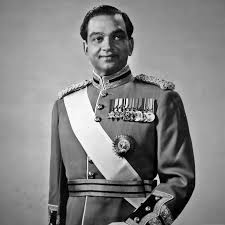
Maharaja Yadavindra Singh of Patiala
A prominent Sikh ruler, Maharaja Yadavindra Singh combined political foresight with military involvement. His leadership helped ensure a smooth transition of Patiala’s state forces into the Indian Army, reinforcing Punjab’s long-standing contribution to national defence.
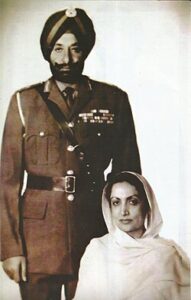
Rajput Princes and Cavalry Traditions
Princes from Jodhpur, Bikaner, and Udaipur served in cavalry and infantry regiments, carrying forward regimental traditions that survive to this day. Their presence strengthened morale and preserved centuries-old martial customs within a modern army.
South India: Professionalism, Reform, and Military Modernity
Southern princely states approached defence with remarkable organization and foresight.
Mysore: Discipline and Scholarship in Uniform
Maharaja Jayachamarajendra Wadiyar of Mysore, though celebrated as a philosopher and patron of the arts, also served as Honorary Commander-in-Chief of the Mysore State Forces. Under his guidance, Mysore maintained one of the most disciplined and modern princely armies, many of whose officers later joined the Indian Army.
Travancore: Military Reform and Integration
The Travancore royal family emphasized structured training, modern equipment, and administrative efficiency. Officers of the Travancore State Forces transitioned smoothly into India’s national defence services, particularly in engineering and technical roles.
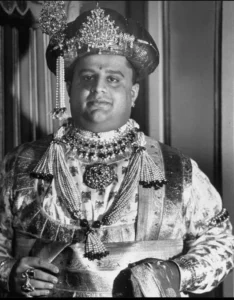
Hyderabad State Forces
Before its merger with India, Hyderabad maintained one of the largest princely armies. Post-integration, many of its officers and soldiers became valuable assets to the Indian Army, contributing significantly to its early strength.
East India: Frontier Royals and Strategic Defence
In eastern India, royalty ruled regions where defence was a daily reality.
Manipur: A Kingdom of Resistance
The Manipuri royal family upheld a powerful military tradition rooted in resistance and frontier defence. Members of the royal lineage were actively involved in military leadership and later contributed to safeguarding India’s sensitive northeastern borders.
Tripura’s Manikya rulers maintained armed forces essential for regional stability. Their cooperation during India’s post-Independence integration helped secure the northeastern frontier.
Cooch Behar: Princes in Active Military Service
Princes of Cooch Behar served as commissioned officers in the British Indian Army and later aligned with independent India’s defence establishment, representing eastern India’s quiet yet vital contribution to national security.
From Thrones to Trenches: The Choice That Defined a Legacy
What makes these stories extraordinary is not privilege, but choice. These royals willingly accepted military discipline, hierarchy, and risk. After Independence, many relinquished titles and political authority, yet continued serving the nation—as officers, diplomats, governors, and defence advisors.
Their service helped:
-
Unify diverse princely armies
-
Preserve regimental identities
-
Stabilize a newly independent nation
-
Set enduring examples of leadership and sacrifice
A Living Heritage of Service
Even today, descendants of these royal families serve in the Indian Army, Navy, and Air Force. Their presence is a reminder that service to the nation transcends lineage.
Indian royalty in uniform represents a rare synthesis of tradition and transformation—where ancient warrior codes evolved into modern patriotism.
In an age when leadership is often measured by visibility, their quiet service stands as a testament to duty over display, and nation over nobility.