
Artificial Intelligence (AI) is transforming the way nations prepare for warfare, protect their borders and respond to emerging security threats. For India, with its vast borders, complex security environment and rapidly evolving technological landscape, AI presents both an opportunity and a challenge. But is artificial intelligence truly a boon for the Indian Armed Forces, or could it become a bane if not used responsibly?
The answer lies in how effectively India balances technological advancement with human judgement, accountability and the values that have always defined its military.
Understanding the Role of AI in the Indian Armed Forces
Artificial Intelligence refers to technologies that enable machines to analyse information, recognise patterns, make predictions and assist with decision-making. In the defence sector, AI can process enormous volumes of data far faster than humans can manually.
India has been developing AI capabilities through organisations such as the Defence Research and Development Organisation (DRDO), alongside initiatives involving the armed forces, defence public sector undertakings, start-ups and academic institutions.
According to the Ministry of Defence’s framework for trustworthy AI, launched in October 2024, reliability, safety, security, transparency, fairness and privacy are important considerations when integrating AI into critical defence operations.
This demonstrates that the conversation is no longer simply about adopting advanced technology. It is also about ensuring that the technology can be trusted when national security is at stake.
How AI Can Be a Boon for the Indian Defence Forces
1. Enhanced Border Surveillance and Threat Detection
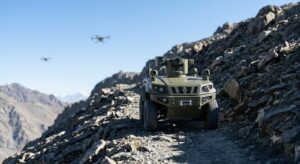
India shares extensive land and maritime borders, including difficult mountainous terrain and remote areas where continuous surveillance is essential.
AI-enabled surveillance systems can analyse images, radar information, drone footage and sensor data to identify unusual movements or potential threats. These systems can help personnel detect patterns that might otherwise be difficult to notice.
For soldiers deployed in challenging environments, this technology can provide an additional layer of situational awareness and help them respond more efficiently.
The DRDO’s published technology programmes include AI-based image and video analytics for intelligence, satellite sensor data processing and autonomous navigation systems.
2. Smarter and Faster Decision-Making
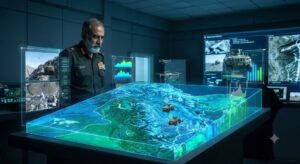
Military commanders frequently need to assess information from multiple sources under considerable time pressure.
AI can help organise intelligence, identify emerging patterns, compare possible scenarios and provide decision-support recommendations. This may allow commanders to make better-informed decisions while reducing the time spent processing large quantities of information.
However, AI should support a commander’s judgement rather than replace it. The ability to interpret context, assess consequences and take responsibility remains fundamental to military leadership.
3. Reduced Risk to Soldiers
One of the most promising applications of AI is its potential to reduce soldiers’ exposure to dangerous environments.
Unmanned ground vehicles, aerial systems and remotely operated platforms can support reconnaissance, logistics, hazardous-area inspection and certain search operations.
In difficult terrain or locations where the risk of ambush, explosives or hostile activity is high, such technologies may allow machines to perform selected tasks before personnel enter the area.
The objective should not simply be to automate warfare, but to use technology wherever it can help protect human life.
4. Strengthening Cybersecurity
Modern defence infrastructure depends heavily on secure communications, digital networks and information systems. These systems can become targets for cyberattacks, data theft and attempts to disrupt military operations.
AI can assist in identifying unusual network activity, detecting potential intrusions and analysing suspicious digital behaviour. It can also help security teams respond to certain threats more quickly.
At the same time, adversaries can use AI to develop more sophisticated cyberattacks. This makes continuous investment in cybersecurity, secure infrastructure and skilled personnel essential.
5. Improved Training and Military Preparedness
AI can enhance training through simulations, virtual environments and computer-generated scenarios that expose personnel to a wider variety of situations.
For example, simulated exercises can help military personnel practise responding to changing battlefield conditions, equipment failures or unexpected developments without the cost and risks associated with recreating every scenario in the real world.
AI-assisted analysis can also help identify areas where additional training may be beneficial.
These applications could improve preparedness while making training more adaptable to the changing demands of modern warfare.
6. Greater Efficiency in Logistics and Maintenance
A military operation depends on much more than weapons and personnel. Equipment availability, fuel, ammunition, medical supplies, transport and communication systems are all critical.
AI can help forecast equipment failures, identify maintenance requirements and improve supply-chain planning. Predictive maintenance, for instance, can flag signs of potential equipment problems before they lead to unexpected breakdowns.
For a country with demanding operational requirements across mountains, deserts, forests and maritime environments, improved logistics can make a meaningful difference to readiness.
The Other Side: How AI Could Become a Bane
Despite its advantages, AI introduces risks that cannot be ignored, particularly when mistakes can have serious consequences.
1. Overdependence on Technology
AI systems are only as dependable as their design, training data, testing and
operating conditions.
A system that performs well in controlled environments may struggle with unfamiliar terrain, poor visibility, unexpected objects or misleading information. If personnel rely too heavily on automated recommendations, they may overlook important details or fail to question an incorrect output.
Military personnel must therefore remain trained to operate effectively when technology is unavailable, unreliable or compromised.
2. Ethical Concerns About Autonomous Weapons
Perhaps the most serious concern involves weapons systems that can identify and engage targets with reduced human involvement.
Decisions involving the use of lethal force require careful consideration of context, proportio
nality, distinction between combatants and civilians, and applicable rules of engagement.
An AI system may identify an object or classify a possible threat, but classification alone does not establish the full circumstances surrounding a target.
The question is not merely whether a machine can make a decision. It is whether that decision can be justified, challenged and held accountable under the applicable legal and ethical framework.
Meaningful human oversight is therefore particularly important wherever AI could influence decisions involving lethal force.
3. Vulnerability to Cyberattacks and Manipulation
AI systems can be targeted through cyberattacks, manipulated inputs or compromised data. An adversary may attempt to deceive a system into misidentifying an object, overlooking a threat or producing misleading recommendations.
In a military setting, even a small error could have far-reaching consequences.
India must consequently prioritise secure system design, rigorous testing, independent evaluation and regular assessments of vulnerabilities. AI-enabled defence systems must also be resilient against deliberate
attempts to mislead them.
4. The Financial and Technological Challenge
Developing advanced AI capabilities requires significant investment in computing infrastructure, research, specialised talent, secure data systems and ongoing maintenance.
Technology also evolves quickly. Systems that are effective today may require substantial upgrades tomorrow.
India must therefore balance investment in AI with other essential defence priorities, including personnel training, equipment modernisation, infrastructure and conventional military readiness.
Indigenous development and collaboration with Indian researchers, start-ups a
nd defence manufacturers can help strengthen domestic capabilities, although building reliable systems will require sustained effort.
5. The Risk of an AI Arms Race
As countries invest in AI-enabled military technologies, other nations may feel pressure to develop comparable capabilities.
This could intensify competition, increase mistrust and shorten the time available for decision-making during a crisis.
When automated systems operate at high speed, there is a risk that incomplete information or a technical error could contribute to escalation before human decision-makers fully understand the situation.
Responsible deployment, appropriate safeguards and international dialogue are important to managing these risks.
Is India Prepared for the AI-Driven Future of Warfare?
India has taken institutional steps towards incorporating AI into defence planning and research. The Ministry of Defence has established mechanisms such as the Defence AI Council and the Defence AI Project Agency, while DRDO continues to work on AI, robotics, autonomous systems and related technologies.
The government has also introduced a framework specifically intended to evaluate trustworthy AI in critical defence operations.
These initiatives are important because successful AI adoption requires more than developing sophisticated algorithms. It requires reliable infrastructure, secure data, trained personnel, effective oversight and clear accountability.
India’s established strengths in engineering, software development and technology research provide a valuable foundation. However, continued progress will depend on translating research into dependable systems that work under real operational conditions.
For further reading, explore the DRDO’s AI and Machine Learning technology programmes and its work on autonomous systems and robotics.

Why Human Judgement Must Remain at the Centre
The Indian Armed Forces are built on discipline, training, leadership, courage and responsibility. These qualities cannot simply be replicated by an algorithm.
AI can process information and identify patterns, but military personnel must interpret those findings in context. A commander may need to consider incomplete intelligence, civilian safety, changing circumstances and the wider consequences of an action.
Technology should strengthen the capabilities of soldiers rather than diminish the value of their experience.
A responsible approach to military AI should include:
- Human oversight: Clearly define which decisions can be automate
- d and which require human authorisation.
- Rigorous testing: Evaluate systems under realistic, varied and adverse operating conditions.
- Cybersecurity: Protect sensitive information, communications and AI infrastructure from manipulation.
- Training: Equip personnel to understand both the capabilities and limitations of AI.
- Accountability: Establish clear responsibility for decisions involving AI-enabled systems.
- Responsible innovation: Ensure that technological progress is aligned with applicable law, military ethics and the protection of human life.
These safeguards are not obstacles to innovation. They are essential to ensuring that innovation serves its intended purpose.
Conclusion: AI in the Indian Defence Forces — A Boon or a Bane?
Artificial Intelligence can be a significant boon for the Indian Armed Forces by enhancing surveillance, supporting decision-making, improving training, strengthening cybersecurity and helping protect soldiers from unnecessary risks.
Yet the same technology can become a liability when it is poorly tested, vulnerable to manipulation or deployed without sufficient human oversight.
The real question is not whether India should embrace AI in defence. It is how India can adopt it intelligently, securely and responsibly.
The future of Indian defence will depend not only on how advanced its technology becomes, but also on how wisely that technology is used. AI should serve as a force multiplier for the courage, judgement and professionalism of India’ s soldiers — never as a substitute for human responsibility.
Ultimately, AI is neither inherently a boon nor inevitably a bane. Its impact will depend on the choices made by the people who develop, deploy and oversee it.
Disclaimer: This article is intended for general informational purposes and discusses publicly available information about AI in defence. It does not represent an official position of the Indian Armed Forces or the Ministry of Defence.